

Lit Resistance: Building a Banned Books Club with Bite
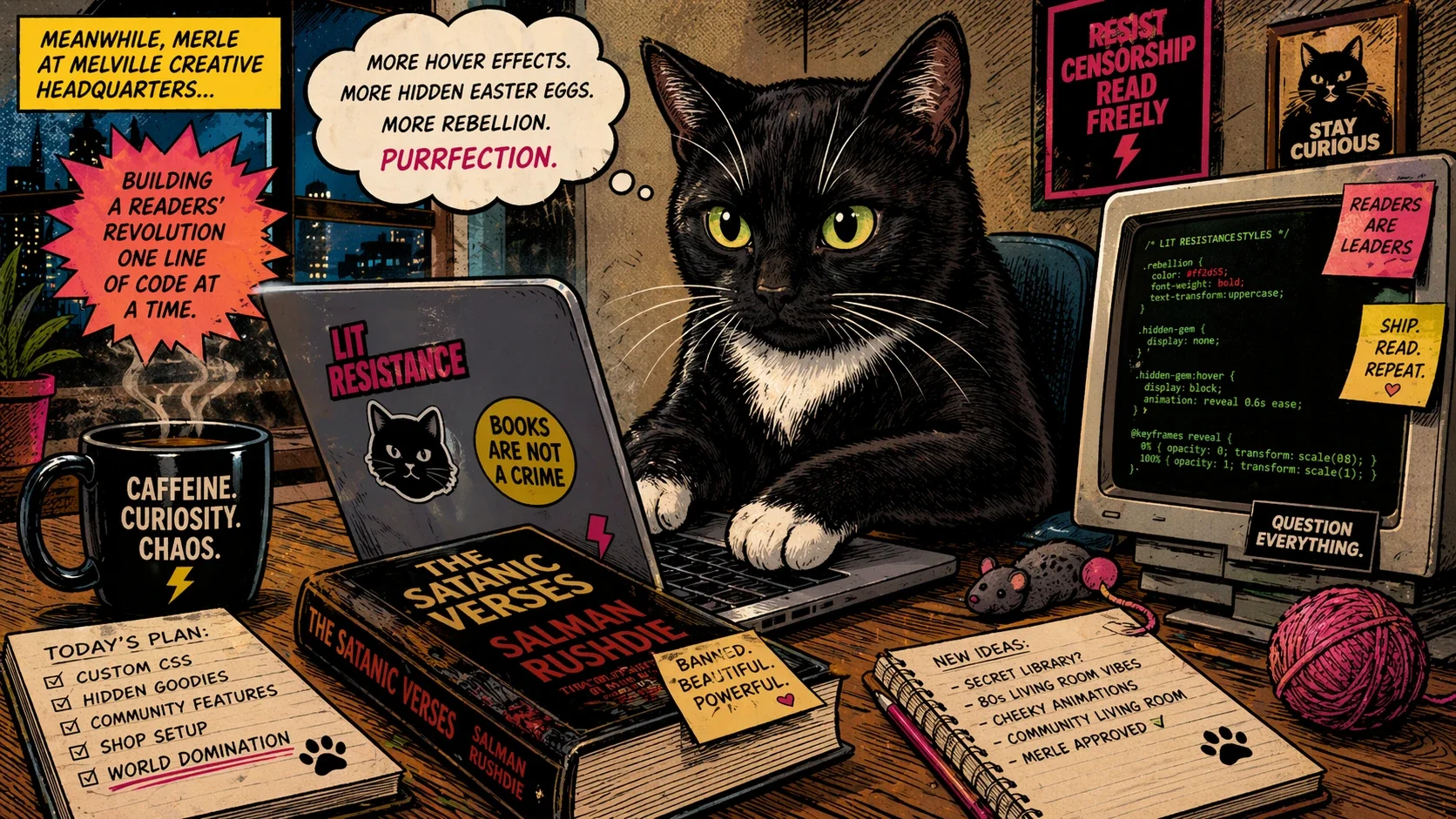
Some projects arrive with a brief. Others arrive with a vibe.
Lit Resistance was very much the second.
Robyn reached out with a smart, simple idea: create a bold, independent online home for her banned books subscription club based in Edmonton. A place for readers who believe books should challenge, provoke, and occasionally make someone in a school board meeting dramatically clutch their pearls.
Naturally, I was in.
Readers are leaders
As someone whose favourite authors have rarely been strangers to controversy, this one felt like home turf. Robyn already had the logo, the spirit, and the core concept. My job was to take that foundation and turn it into something alive.
What started as a clean book club site quickly evolved into something far more interesting: a funky, interactive digital living room that feels like reading in your coolest aunt’s 1980s lounge, if your coolest aunt also had strong opinions about censorship and excellent taste in literature.
The visual direction leaned hard into bright swagger, layered colour, playful reveals, and a little rebellion. We built hidden elements throughout the site, subtle interactions, hover surprises, and small cheeky details that reward curiosity. Honestly, I used a ridiculous amount of custom code on this one, and I regret absolutely none of it.
This is one of those rare projects where the site itself becomes part of the experience.
Beyond the visual personality, the structure had to work hard too. We built out the full shop experience, refined mobile responsiveness, created smooth user flow across subscriptions and archive content, and developed the “Living Room” community space—a place where members can connect, comment, and keep the conversation going beyond the books themselves.
That part mattered. A book club should feel like a club, not just a checkout page.
The goal was never just to sell subscriptions. It was to create belonging.
And, of course, quality control was handled by my youngest and most demanding creative director: Merle.
Merle may only be one, but he understands the importance of literature. He has personally supervised keyboard sessions, attempted several editorial interventions by sitting directly on my hands, and remains cautiously optimistic that I may eventually finish The Death of Virgil before he does.
Frankly, the odds are against me.
Projects like Lit Resistance are why I love this work. The best websites do more than function—they feel like something. They create atmosphere. They reflect personality. They give people a reason to stay.
This one has attitude, charm, and just enough mischief.
Exactly as it should.
