

They Said It Couldn't Be Done on Squarespace
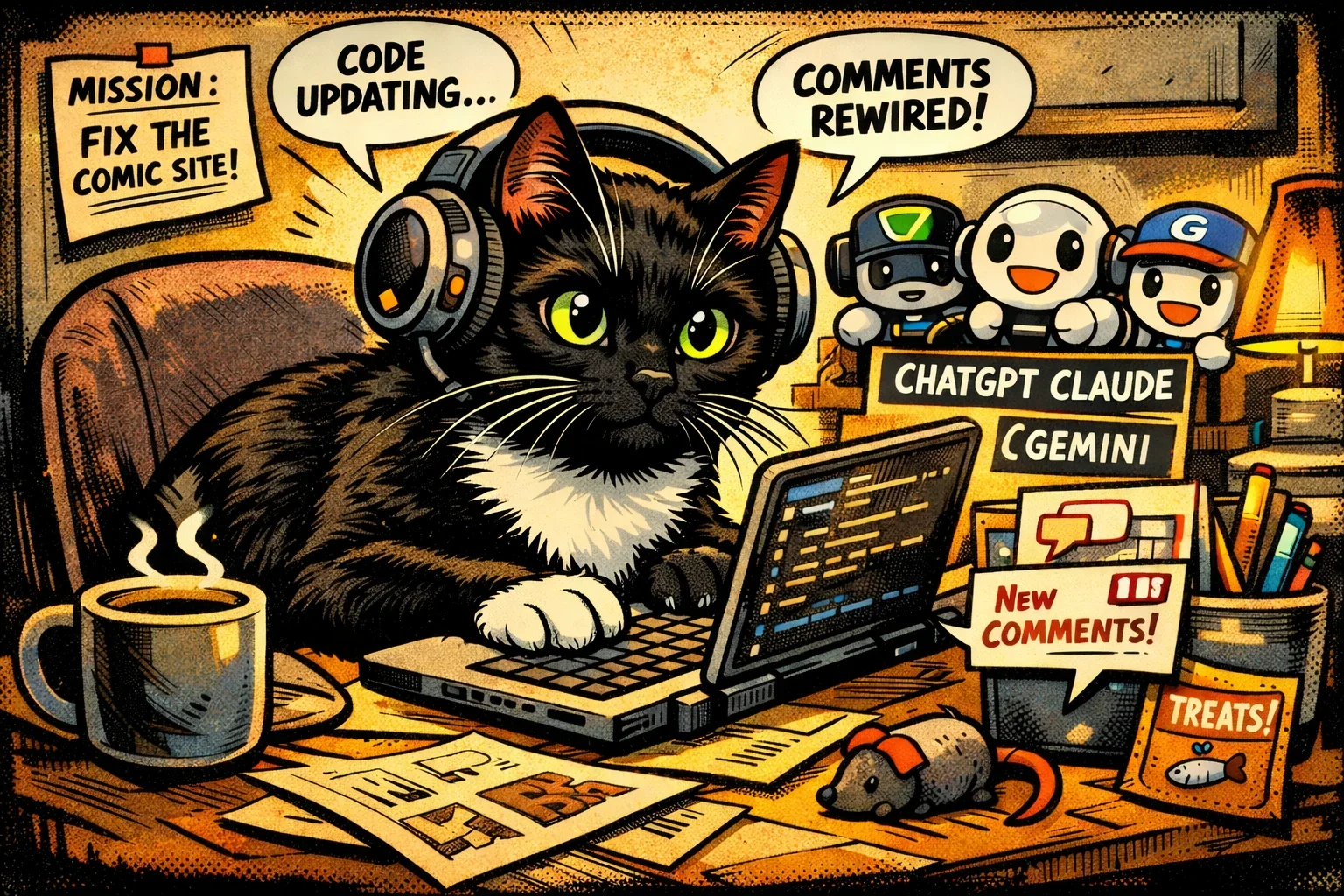
How stubbornness, a comic, and the right tools turned "you'll need to migrate" into a working reader.
Every so often, a project lands that's less client brief and more creative dare.
This was one of those. I was approached—out of the blue—by David, a U.S.-based creator of Ghost of the Gulag, a dark, intelligent, visually striking comic. The work itself is excellent. Smart pacing, strong atmosphere, the kind of story that rewards readers who actually sit with it.
The site? Built on Squarespace. Which, frankly, is a very good starting point.
But David didn't want his comic to behave like a blog. He wanted a natural, continuous scroll for reading pages like a proper comic. Chapters that made sense for readers, not just URLs. A cleaner, more intentional reader layout. A redesigned header that framed the work properly. A comments experience that felt interactive instead of bolted-on.
None of this is native to Squarespace. At least, not out of the box.
When I floated the idea to other designers and developers, the response was consistent: "Nice idea, but you'll need to move platforms."
Which is usually where these stories end.
The usual advice is often the laziest advice
Here's the honest part: I didn't know if it could be done either.
So I told David to give me a couple of days. Those days were spent doing what good design actually requires when the tools don't immediately cooperate: digging through documentation, testing assumptions, reaching out to the wider Squarespace community, breaking things safely, then breaking them again slightly less safely.
When the usual paths ran out, I brought in accelerators.
Claude. ChatGPT. Gemini. Not as replacements for thinking—but as tools to test assumptions faster, iterate on solutions, and push past the "not supported natively" wall that stops most projects cold.
Merle, my desk assistant, supervised from his usual perch on the warm laptop.
Together, we reworked the underlying page structure. Built a custom infinite-scroll comic reader. Introduced chapter-based navigation with deep links. Created a pop-out comment system that feels intentional, not cluttered. Refined the header and layout so the comic—not the template—leads the experience. Added small but meaningful UX details that comic readers actually expect.
All while staying inside Squarespace.
The result:
Ghost of the Gulag now reads like a comic should.
You scroll. You read. You move seamlessly through chapters. You engage with comments when you want to, not when the platform forces you to.
David gets to stay on a platform he already understands and trusts. Readers get a better experience. And Squarespace gets pushed a little further than people assume it can go.
Why this matters beyond one project:
This wasn't just a win for one client. It's a reminder that platforms are starting points, not prisons. "Not supported natively" does not mean "not possible." Good design is about problem-solving, not just aesthetics. And the right mix of curiosity, stubbornness, and modern tools goes a long way.
Also, Merle approved the final build. That matters.
A final thought:
If you've been told "you need a different platform" and that answer feels lazy, it probably is.
Sometimes the solution isn't switching tools. Sometimes it's using them properly—and knowing when to push past what the documentation says is possible.
If you're stuck with a platform that "can't" do what you need, let's talk. The limitation might not be the tool.
